FORMAT
Fully Online
Live synchronous + async
DATES
March 8 - April 30
2027
DURATION
8 Weeks
~5-6 hrs/week commitment
PUBLIC SECTOR/NGO PROGRAM FEE
$2,300 USD
Discounts available
PRIVATE SECTOR PROGRAM FEE
$2,800 USD
Discounts available
CREDENTIAL
Certification 
From UChicago Harris
PROGRAM OVERVIEW

Train to use AI with the rigor your work demands.

AI is rapidly becoming the primary interface through which professionals engage with data and evidence. This eight-week program gives analysts, managers, and practitioners the skills to use it well: with accuracy, accountability, and sound judgment.

Grounded in Harris's tradition of evidence-based analysis, the program combines practical AI use, responsible governance, and a substantive understanding of how AI is reshaping professional work. Participants leave with both a working command of AI tools and the critical frameworks to apply them with confidence. No programming background required.

AI
WHO WILL BENEFIT

Designed for professionals across sectors and career stages. 

This program is built for professionals who synthesize information, make evidence-based recommendations, and are accountable for the quality of both. No programming background required. 

Policy Analysts

Provide recommendations and uncover patterns or insights for literature reviews, while preserving rigor.

Legal Analysts

Augment research and memo drafting without compromising accuracy or citation standards.

Management Consultants

Build repeatable AI systems for client deliverables, creating more time for judgment-intensive work.

Project Managers

Streamline coordination tasks to focus more on strategic work. 


Financial Analysts

Automate extraction from filings and transcripts and stress-test findings before review.

Non-Technical Professionals

Move beyond informal AI use to a structured, repeatable workflow system. 


CURRICULUM & LEARNING OUTCOMES

Eight weeks of instruction built for immediate application.  

The program is built on three pillars: use AI responsibly, use AI effectively in your work, and be a knowledgeable consumer of AI developments. Each week combines live faculty instruction, bi-weekly practitioner sessions with industry experts, and TA-supported project work. The capstone runs in parallel throughout.

Pre-Work: Building a Foundation: A series of short videos will be released two weeks before the official program begins. These videos will feature Harris faculty explaining machine learning concepts underlying AI models:

  • Fitting models as matching patterns in data
  • Flexibility and the bias/variance tradeoff
  • Validation
  • Neural network basics

The pre-work module establishes a common vocabulary that will be frequently referenced and built upon throughout the program. Content is tailored for non-technical audiences.

Week 1: From User to Power User: Prompt engineering fundamentals, structured output requests, tool landscape, and a framework for assessing where AI adds professional value versus creates risk.

Week 2: Building Your AI Voice: System prompts, iterative refinement, prompt libraries, and the transition from one-off prompts to repeatable workflow systems.

Practitioner Session: A Working Professional's Workflow: Live demonstration of real-world AI use inside genuine institutional constraints.

Week 3: Responsible AI: Evidence, accountability, and the public stakes. A framework for assessing when AI use is professionally defensible in high-stakes and public-interest contexts.

Week 4: AI Workflows for Analysts: Reusable research templates, document analysis at scale, knowledge management, and introduction to output evaluation.

Week 5: Trust Calibration: Detecting bias, logical inconsistencies, and fabrication. Building structured verification into the workflow rather than adding it afterward.

Practitioner Session: AI-Assisted Research in Practice: How a working researcher maintains rigor at AI scale.

Week 6: Agentic AI and Human-in-the-Loop Design: Multi-step workflows with deliberate human judgment checkpoints, and stress-testing complex AI pipelines for bias and consistency.

Week 7: The AI Landscape: Signal, noise, and the future of your work. How to read model releases, navigate AI geopolitics, and build a sustainable personal practice for staying current.

Practitioner Session: AI at Organizational Scale: A real, multi-step agentic workflow in production, including how teams handle failures.

Each participant presents a working AI-assisted workflow built around a real challenge from their own professional context. The capstone is sector-specific in application: a consultant's workflow looks different from a financial analyst's or a legal researcher's, yet all rest on the same foundations of evidence evaluation, output verification, and workflow design. Participants who do not have a project from their professional context, or who prefer a structured challenge with all materials provided, may select a project from an assigned project library. The project library contains select challenge briefs organized by sector.  

Structured peer review and faculty feedback grounded in the program's evidence-based evaluation standards. Participants will have a weekly stand up with an assigned mentor. Stand up are designed to be quick check-ins of no more than 20 mins to receive feedback on Capstone progress. Mentors will be assigned based on project scope. Cross-sector observations will show how colleagues across policy, finance, law, and operations solved comparable problems differently.

A closing synthesis session connects the full curriculum arc to a forward-looking view of AI's trajectory, with guidance on staying current and access to the Harris alumni network.

What Participants Leave With

Prompt engineering and reusable systems. Move from ad hoc prompting to building personal AI systems for knowledge management, document production, and project coordination.

AI-assisted analytical work. Apply AI to data exploration, memo drafting, literature synthesis, and evidence evaluation, with structured methods for verifying outputs.

Agentic AI and human-in-the-loop design. Deploy more autonomous AI workflows while maintaining oversight for consequential decisions. Participants know where automation is appropriate and where it is not.

Responsible AI and the broader landscape. Understand the ethical, legal, and institutional considerations of AI use, and how the latest developments are reshaping work across policy, finance, law, and other professional domains.

Upcoming Events

red shirt classroom -1

AI Power Use for Professional Impact Sample Class with Mark Polyak

NOVEMBER 17 | 7:00 PM CST
In this virtual session, hear from Mark Polyak, a practitioner instructor in AI Power Use, and experience the program's learning approach firsthand. Mark will lead a mini lecture on how professionals can move beyond ad hoc AI use toward structured, repeatable workflows. 

Harris Credential Programs Info Session: AI Power Use for Professional Impact

DECEMBER 8 | 12:00 PM CST
In this virtual information session, hear the Admissions team discuss AI Power Use for Professional Impact: Workflows, Judgments, and Responsible Practice, a program for those who want to use AI with accuracy, accountability, and sound judgment. No programming background is required.
Harris students sitting together inside the Keller Center

AI Power Use for Professional Impact Roundtable with Prof. Austin Wright

JANUARY 12 | 7:00 PM CST
Join Austin Wright, Associate Professor and Director of Strategic Initiatives for this virtual program as he explores why responsible, rigorous AI use has become a core professional skill, how the program helps analysts, managers, and practitioners build reliable AI workflows, and how it can advance your career.
Applied AI for Professionals

Practical skills. Immediate application.

Apply Today Attend an Event
PROGRAM FACULTY SPOTLIGHT

Instruction from Leading Scholars and Active AI Practitioners

Instruction combines Harris faculty expertise with bi-weekly practitioner sessions from industry leaders actively using AI in professional settings.

austin_wright_headshot 2025

Austin Wright

Wright is an Associate Professor and Director of Strategic Initiatives at the University of Chicago Harris School of Public Policy. His research leverages innovative data capture techniques, massive-scale datasets, and data science tools to study a range of public policy challenges


Read Austin's Full Bio

2018_chris_headshot

Chris Clapp

Clapp is an Assistant Instructional Professor at the Harris School of Public Policy whose research interests are in applied microeconomics, primarily the fields of public, urban, environmental, and labor economics.

 

Read Chris' Full Bio

mark_polyak

Mark Polyak

Polyak is the Chief Operating Officer of MINT, where he drives the company’s product and technology strategy, with a strong focus on Agentic models, AI-driven analytics, and seamless data integration. Polyak also serves as the AI Operating Partner at Tikehau Capital.
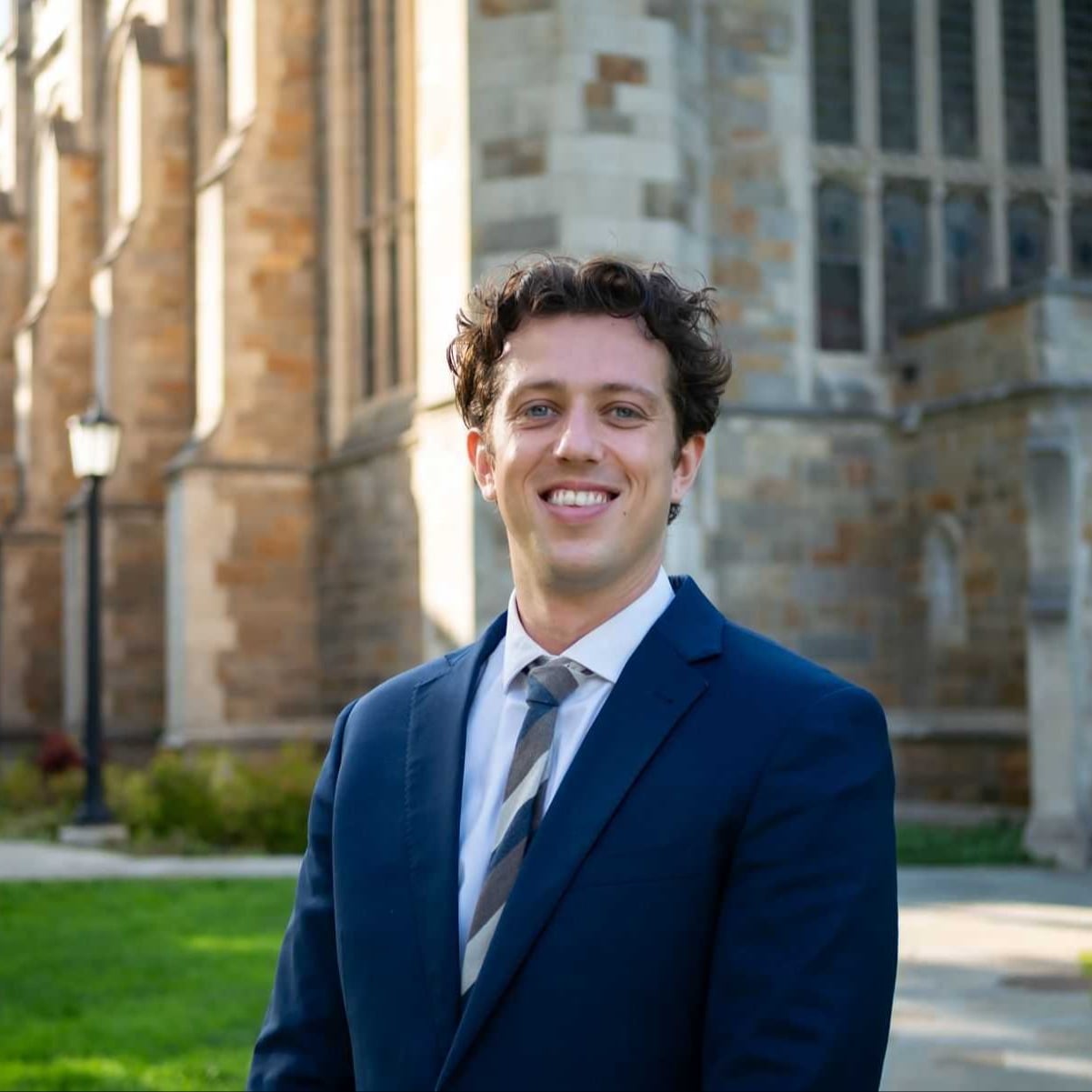
 

Read more about Mark's work at MINT

dvd

David Van Dijcke

Van Dijcke is an Assistant Professor of Economics at the University of Virginia and Head of AI at HSF Group, a US-based AI reliability startup. His research develops novel econometric methods that integrate multimodal data into causal inference. 


Read David's Full Bio

ADMISSIONS & PROGRAM FEES

Accessible to self-funders and global learners.

The Admission Committee reviews applications on a rolling basis until the cohort is full. Admitted applicants receive an email confirmation with payment details and next-step actions. Accepted applicants are not officially enrolled in the program until payment is submitted and registration is complete.

The table below outlines the program cost structure, with fees based on application timing. A $300 per person discount is available  for organizations with 3 or more attendees. Please contact Lingyang Zhang at lingyang@uchicago.edu for more details. 

Application Submission Timing Public and Non-Profit Sector
Employee Program Fee
 Private Sector
Employee Program Fee
 
September 2026 - November 30, 2026  $1,800 

$2,300

December 1, 2026 - January 15, 2027

$2,000

$2,500

January 16, 2027 - March 2027

$2,300

$2,800

University of Chicago alumni, Harris Credential Program alumni, and current UChicago students and staff are eligible for a special discounted program fee of $1,200.


Refund and Cancellation Policy

If the participant decides to cancel their Program enrollment, the participant must submit a request in writing at least 30 days prior to the program start date to lingyang@uchicago.edu to receive the full paid amount. Requests received 14 to 30 days before the Program start date are subject to a payment of 50% of the Program fee. Requests received within 14 days of the Program start date are subject to full payment of the Program fee. If the participant is unable to join the Program due to circumstances that the participant has no control or influence over, the refund amount will be considered on an individual case-by-case basis.